
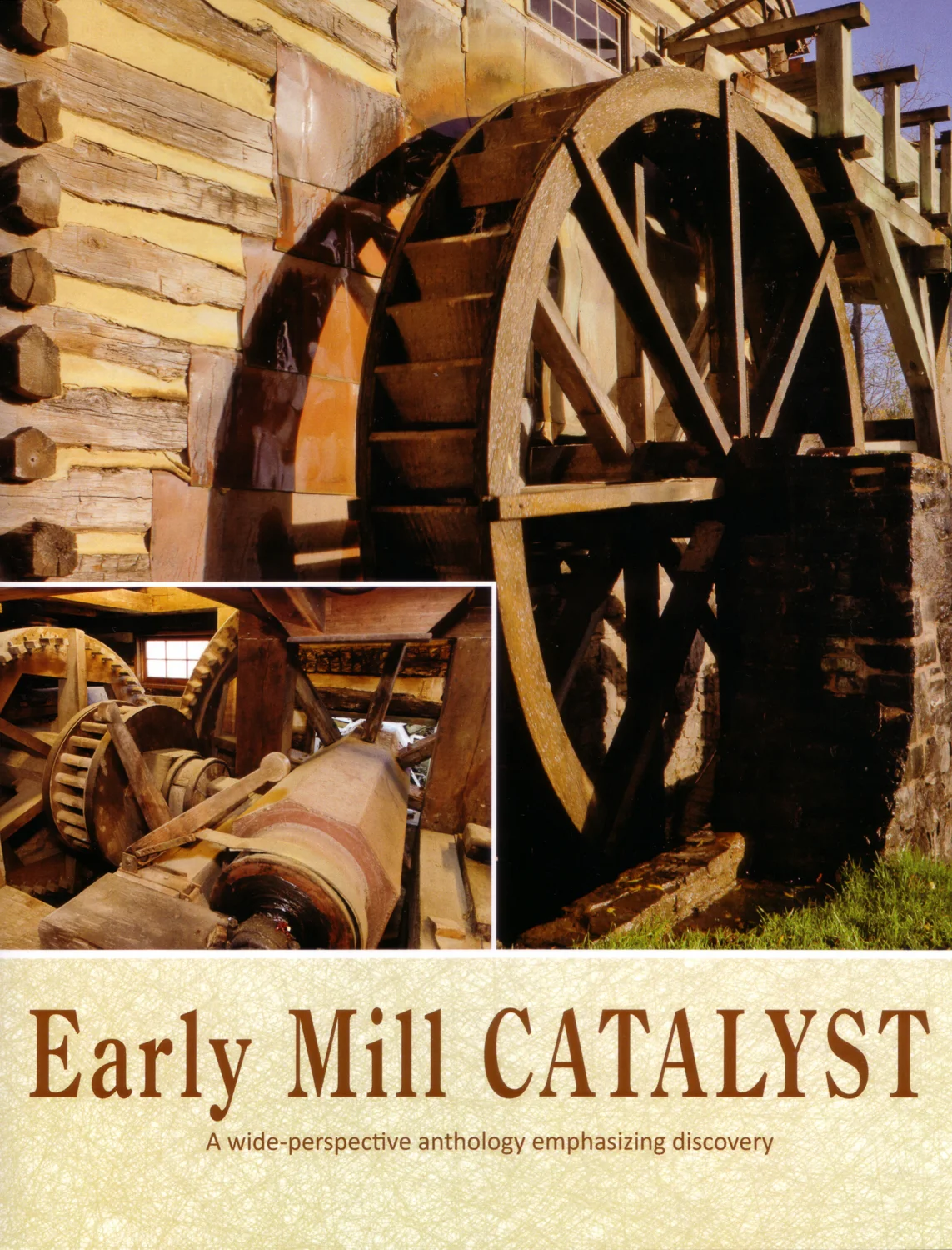
I photographed Cyrus McCormick's original watermill in Raphine, Virginia, for Early Mill CATALYST. McCormick invented the mechanized reaper, which revolutionized agriculture.
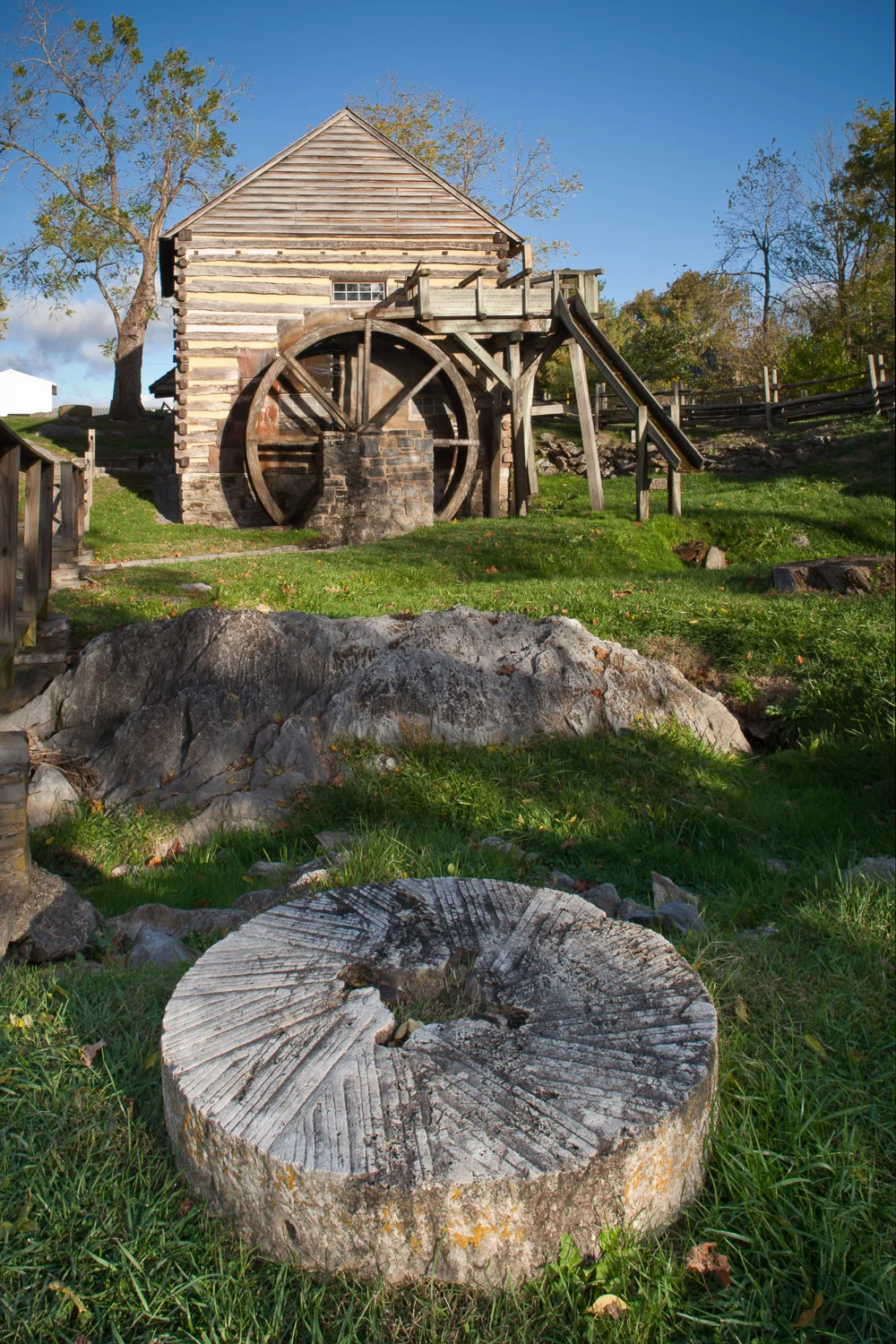
An old "bedstone" lies outside the mill. A "runner" stone rotates on top of it to mill wheat.
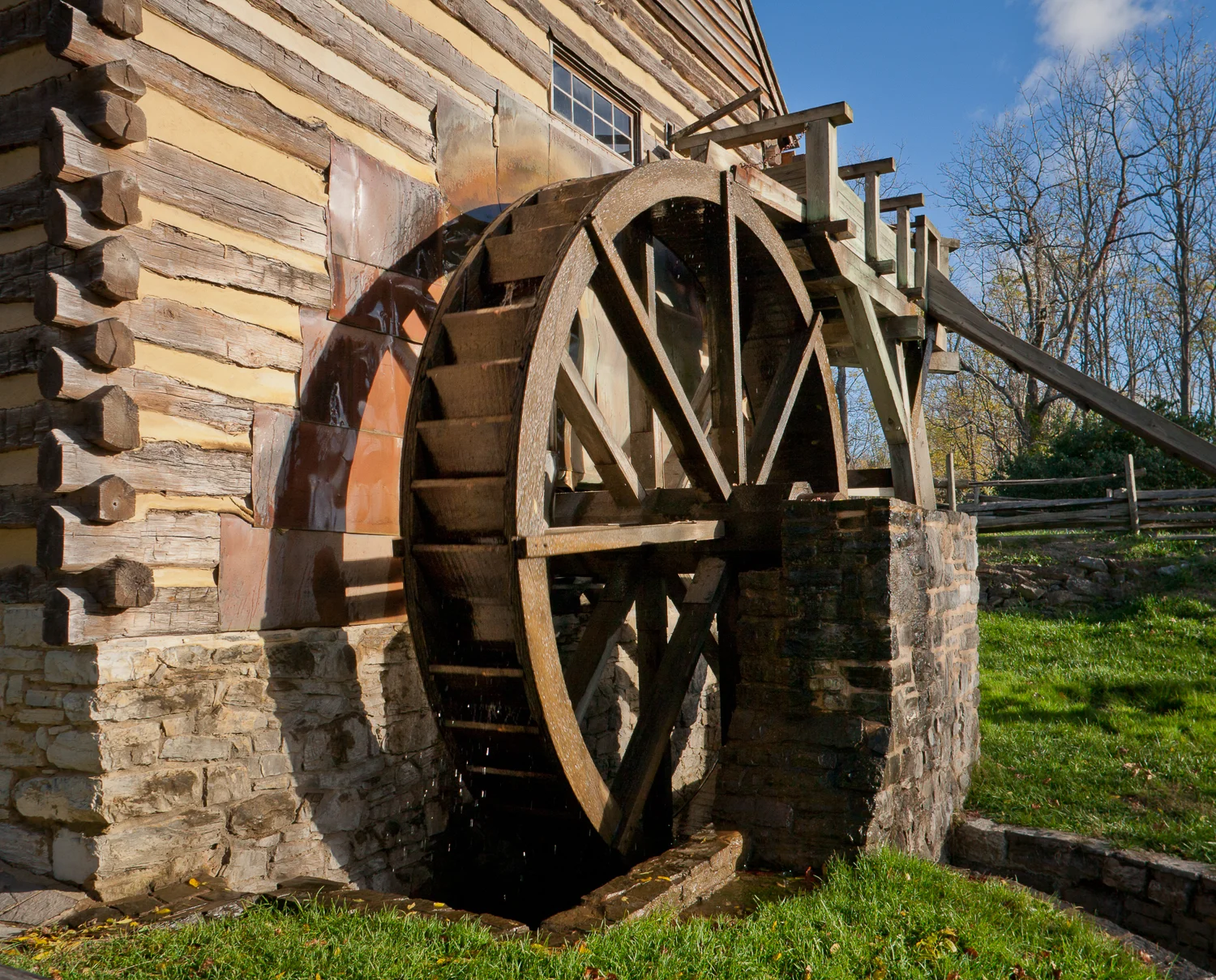
The water wheel turns almost continuously, fed by water from the race above. The wheel is made of beechwood.
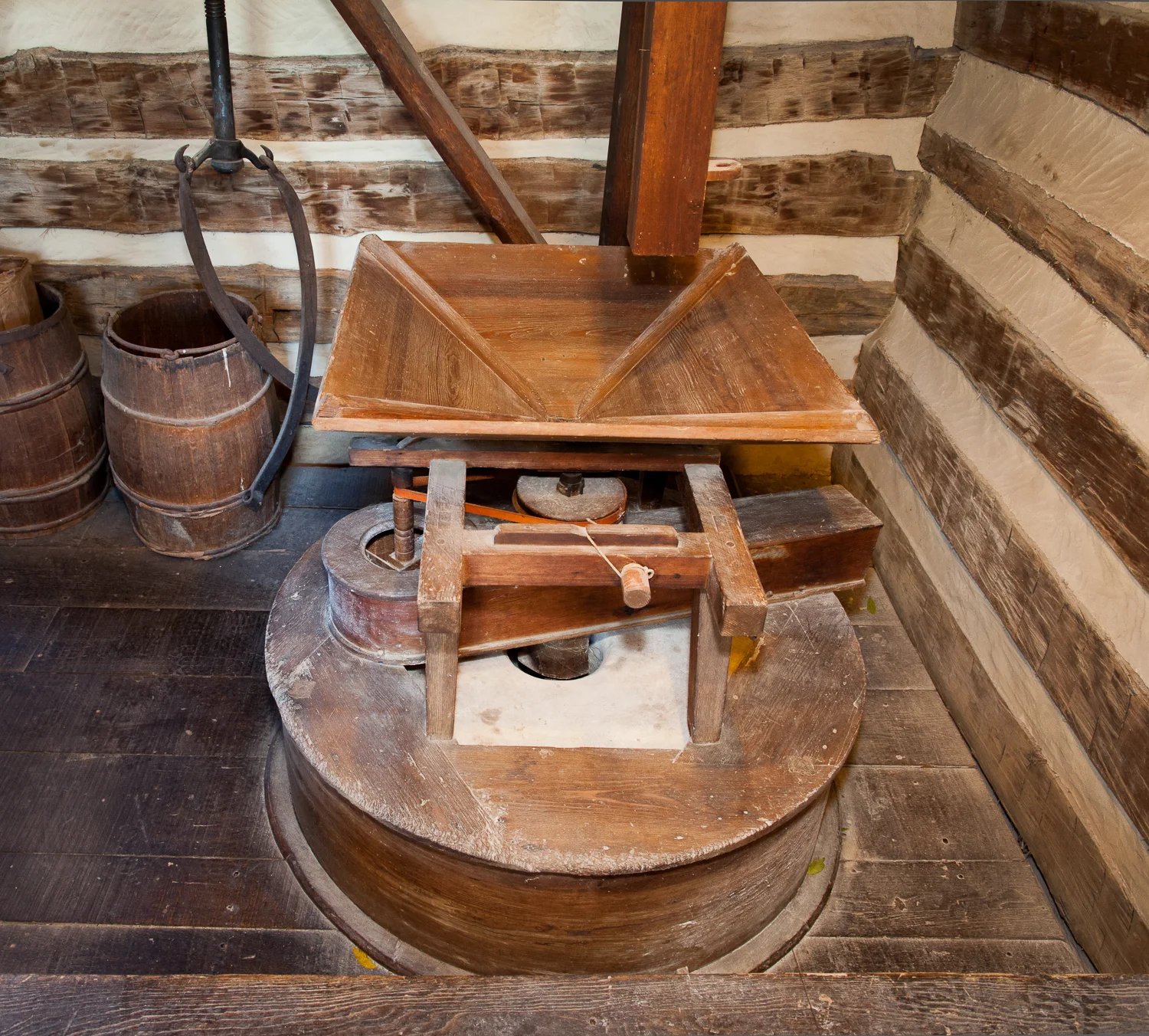
The grindstones are fed grain or corn via a chute from the upper floor smh through a square funnel into a hole in the "runner," the upper stone. Finished corn meal and wheat flour flow into bins on the floor below.
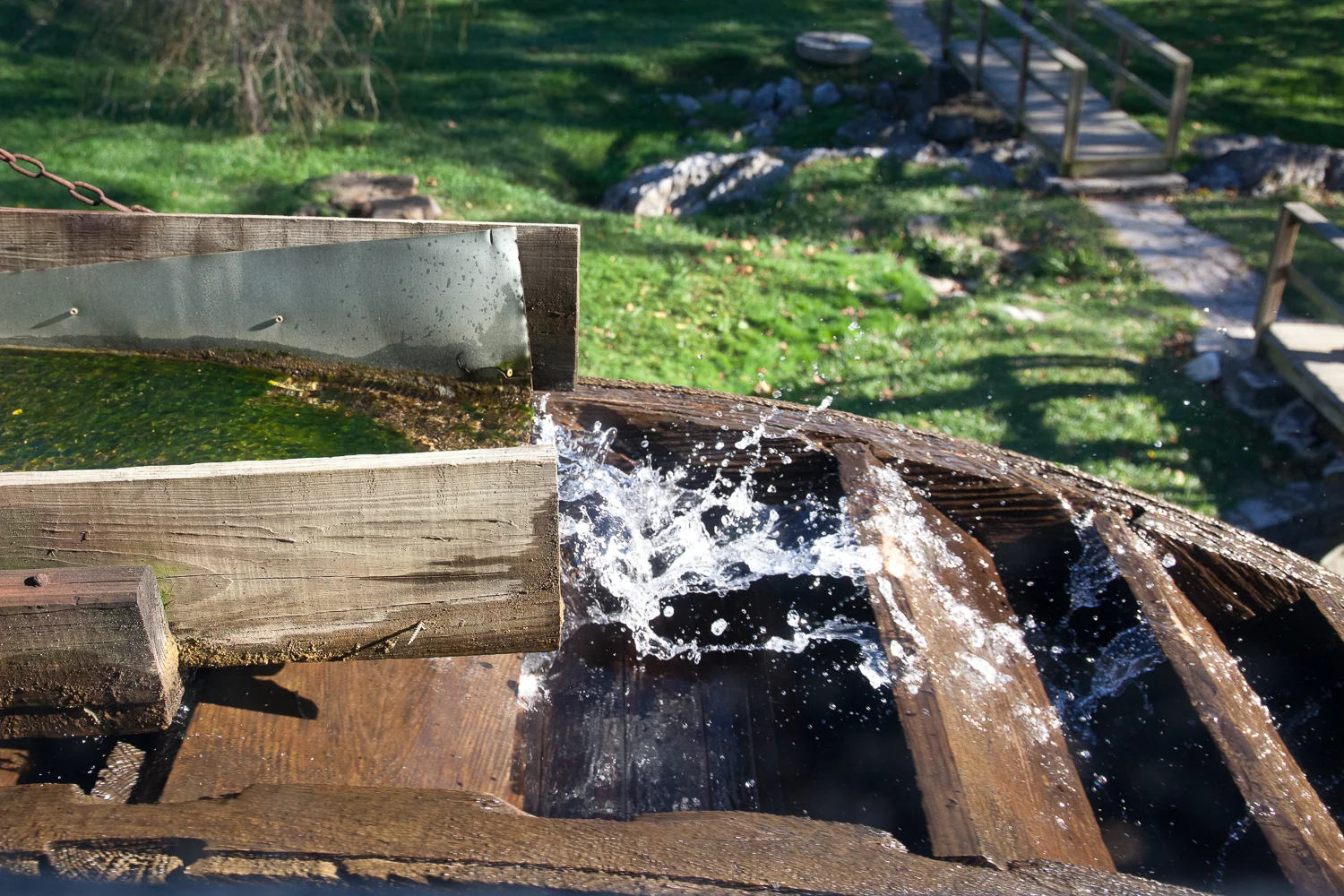
Water from the race constantly provides the driving force for the entire mill.
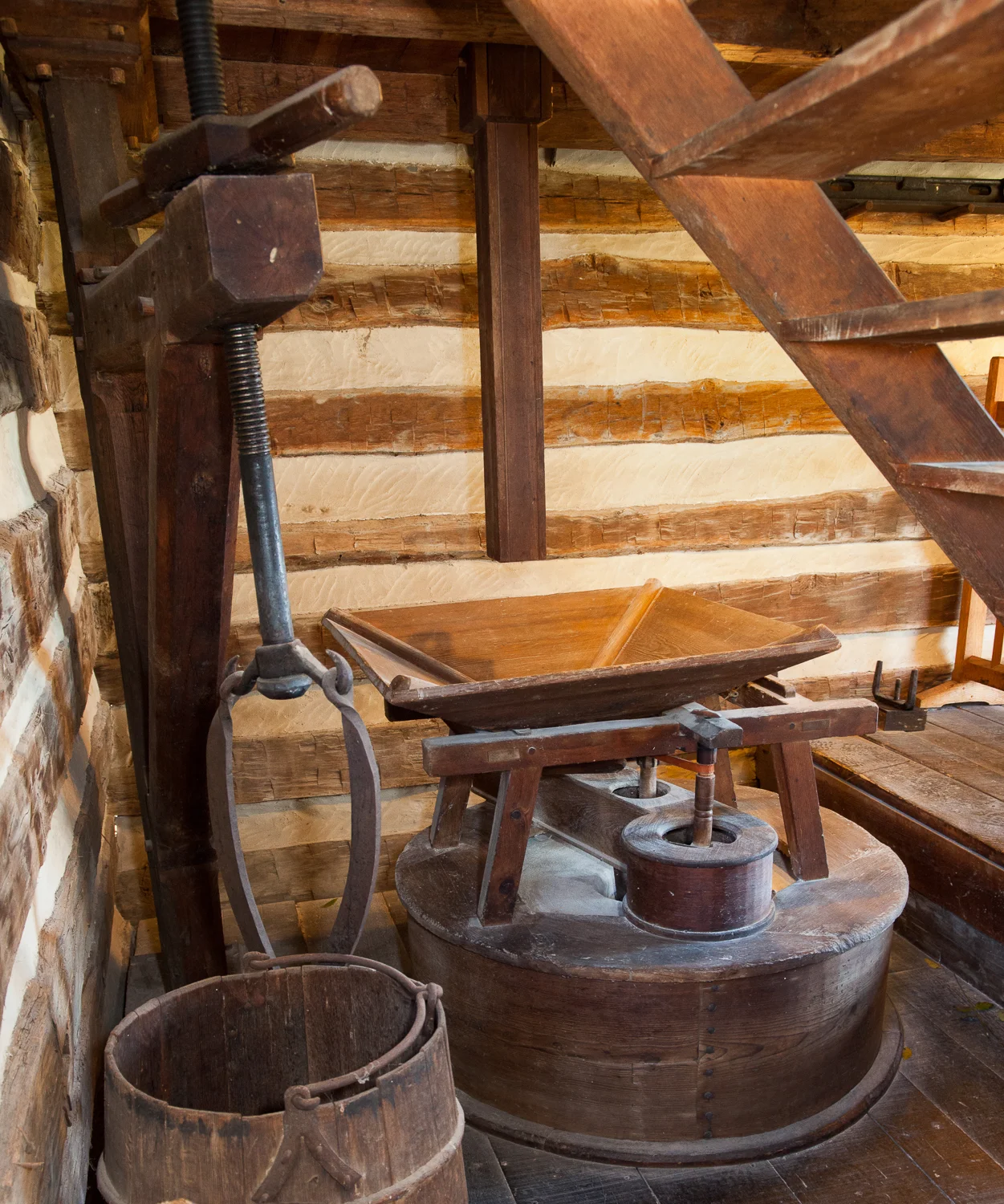
The grindstones are fed grain or corn via a chute from the upper floor and channeled through a square funnel into a hole in the "runner," the upper stone. Finished corn meal and wheat flour flow into bins on the floor below. The crane at left is used to remove the runner for maintenance.
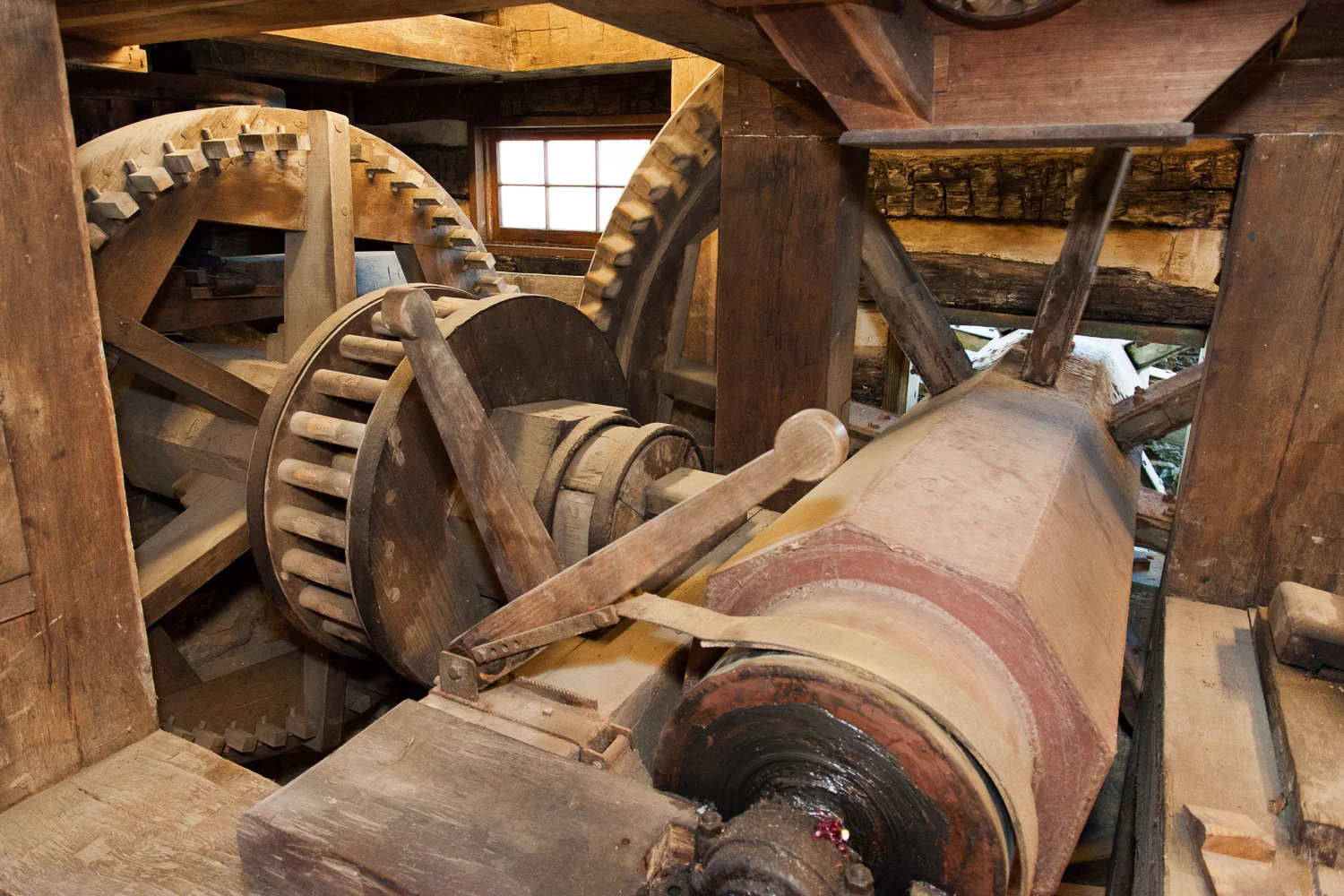
The main axle, directly connected to the wheel outside, runs laterally into the building. Its power is transferred to the milling machinery through wooden gears.
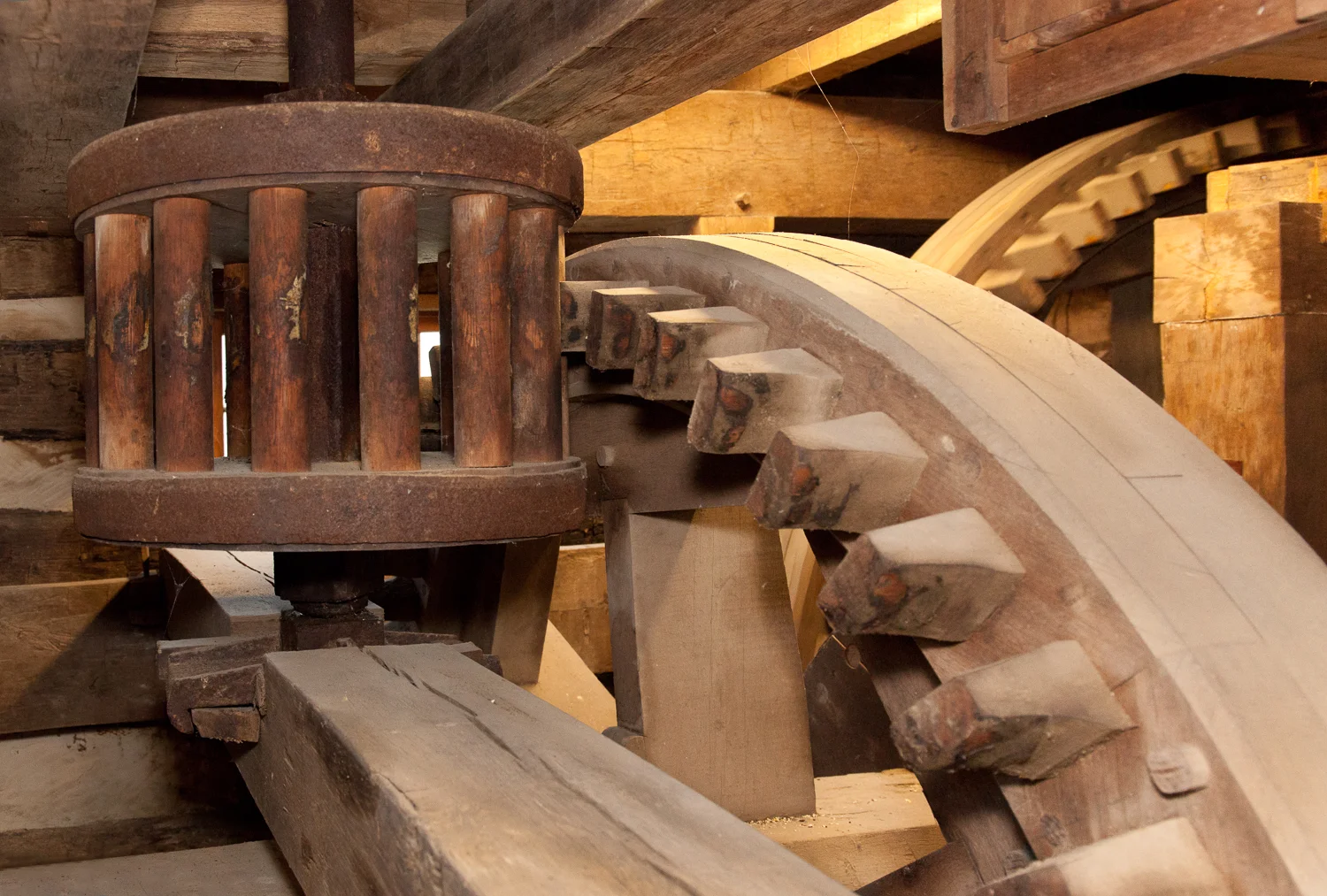
The lantern gear at left connects to the millstones on the floor below via the larger gears that connect to the watermill's axel.
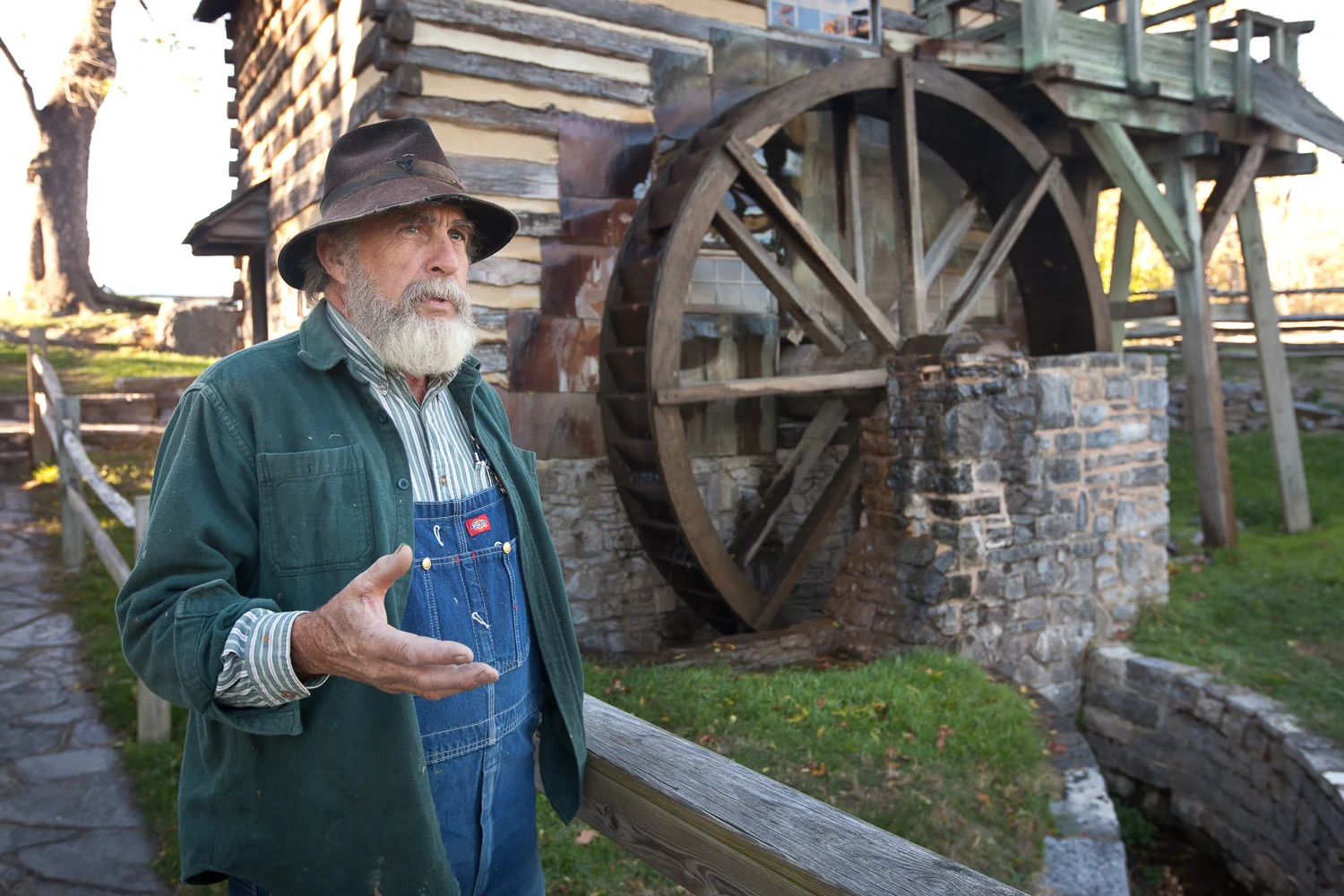
Glenn Wilson, Master Craftsman & Millwright, restored the mill. He explains the workings its workings and importance to the surrounding farm community. Mills often served as social and economic hubs that gave rise to cities and towns across early America.
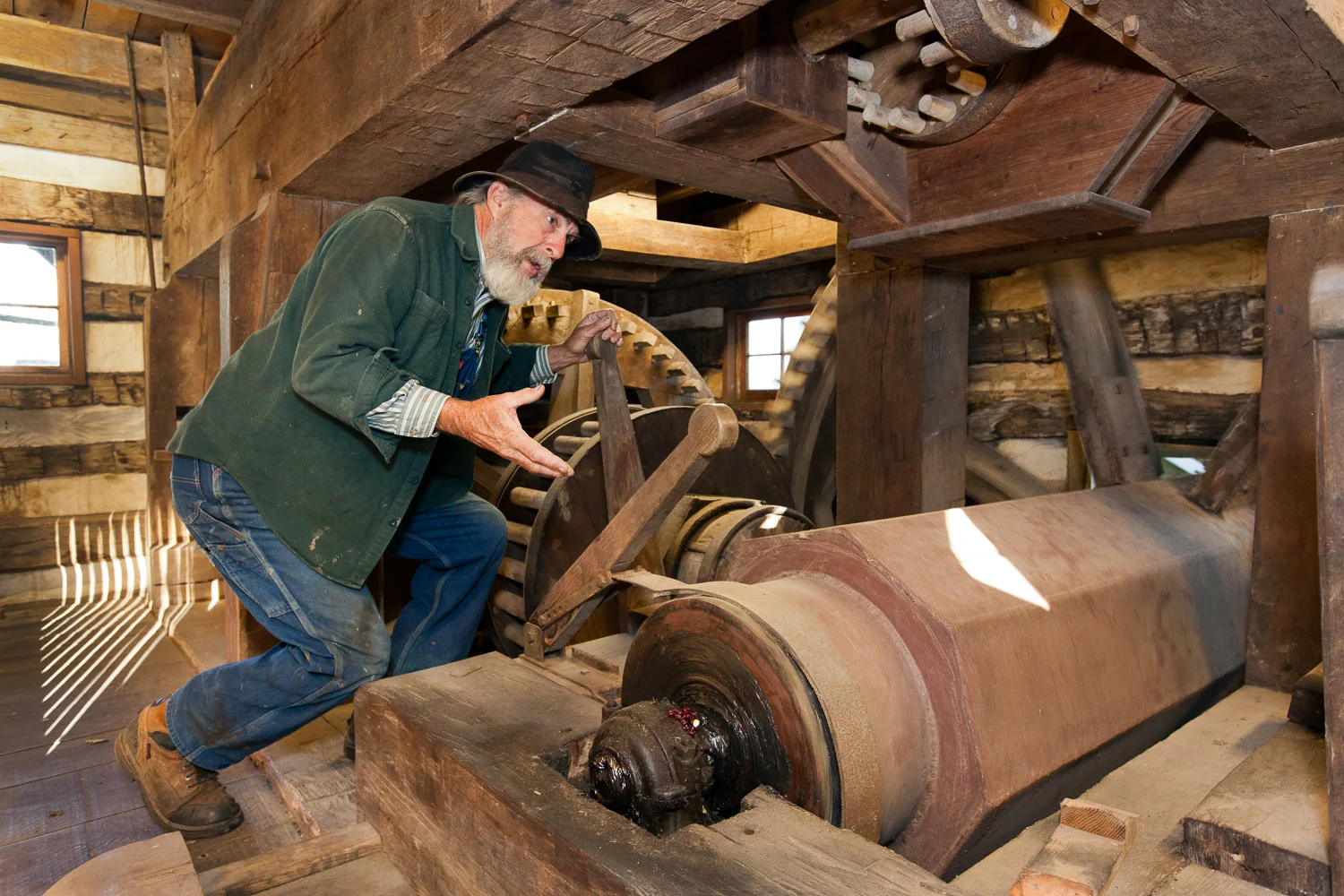
Glenn Wilson demonstrates how the axel's power is split to run both millstones and the sifting bolt on the upper floor.
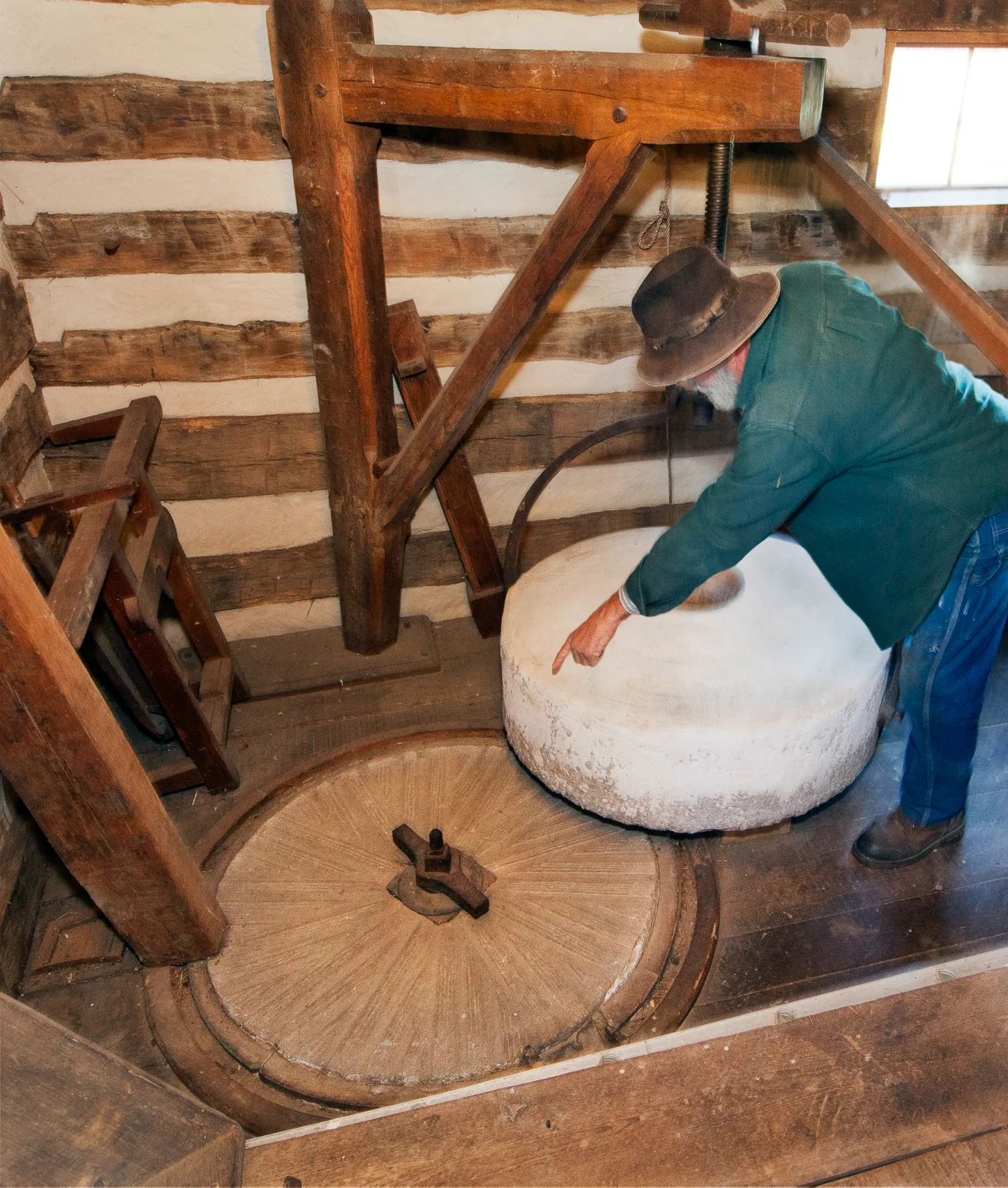
Glenn points out the rind, the short iron cross-piece that rotates the "runner," or upper stone. The lower "bedstone" is stationary. The upper stone is hanging in the crane that allows it to be pulled away for maintenance.
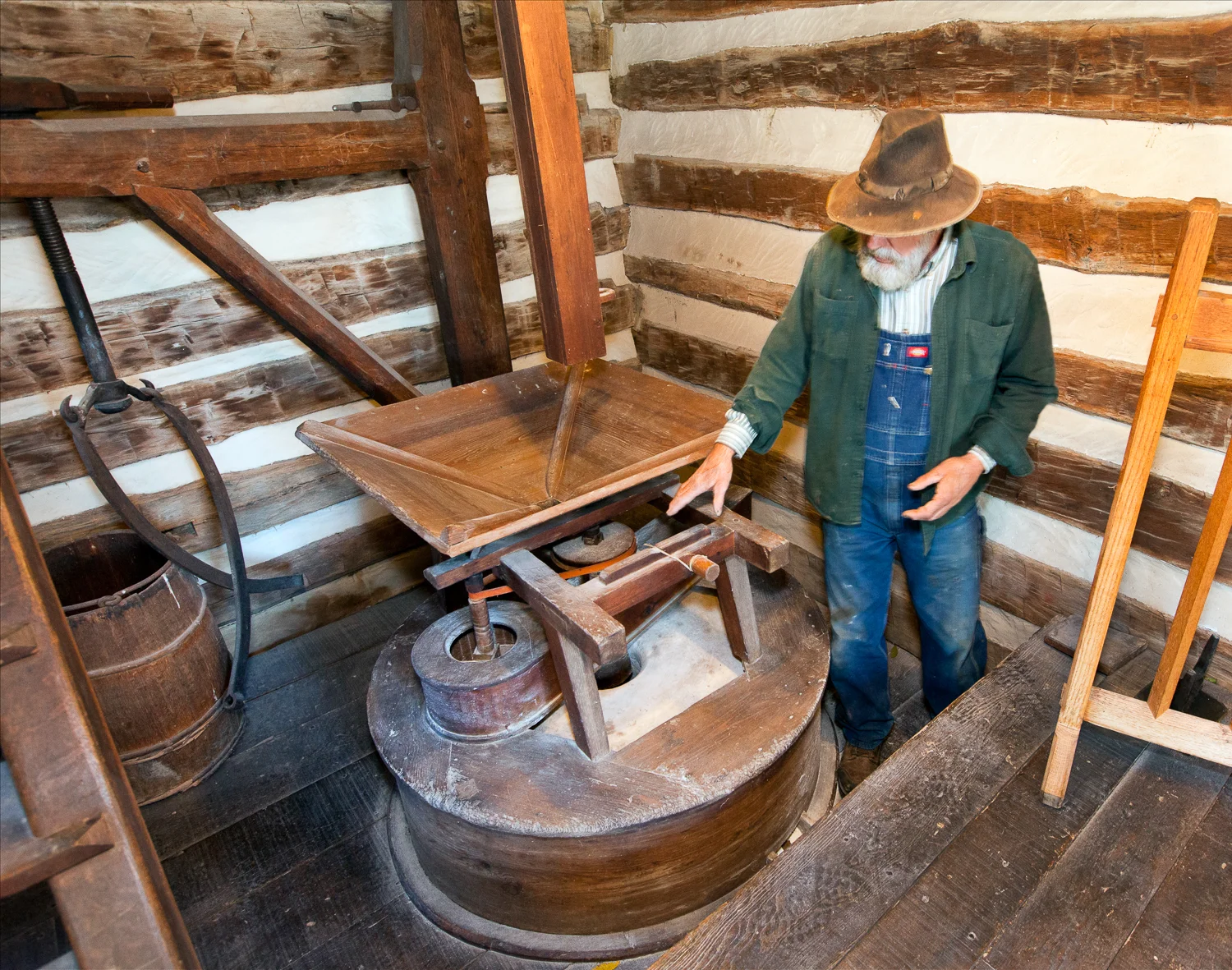
The hopper for corn to be fed into the stones encased in a wooden drum.
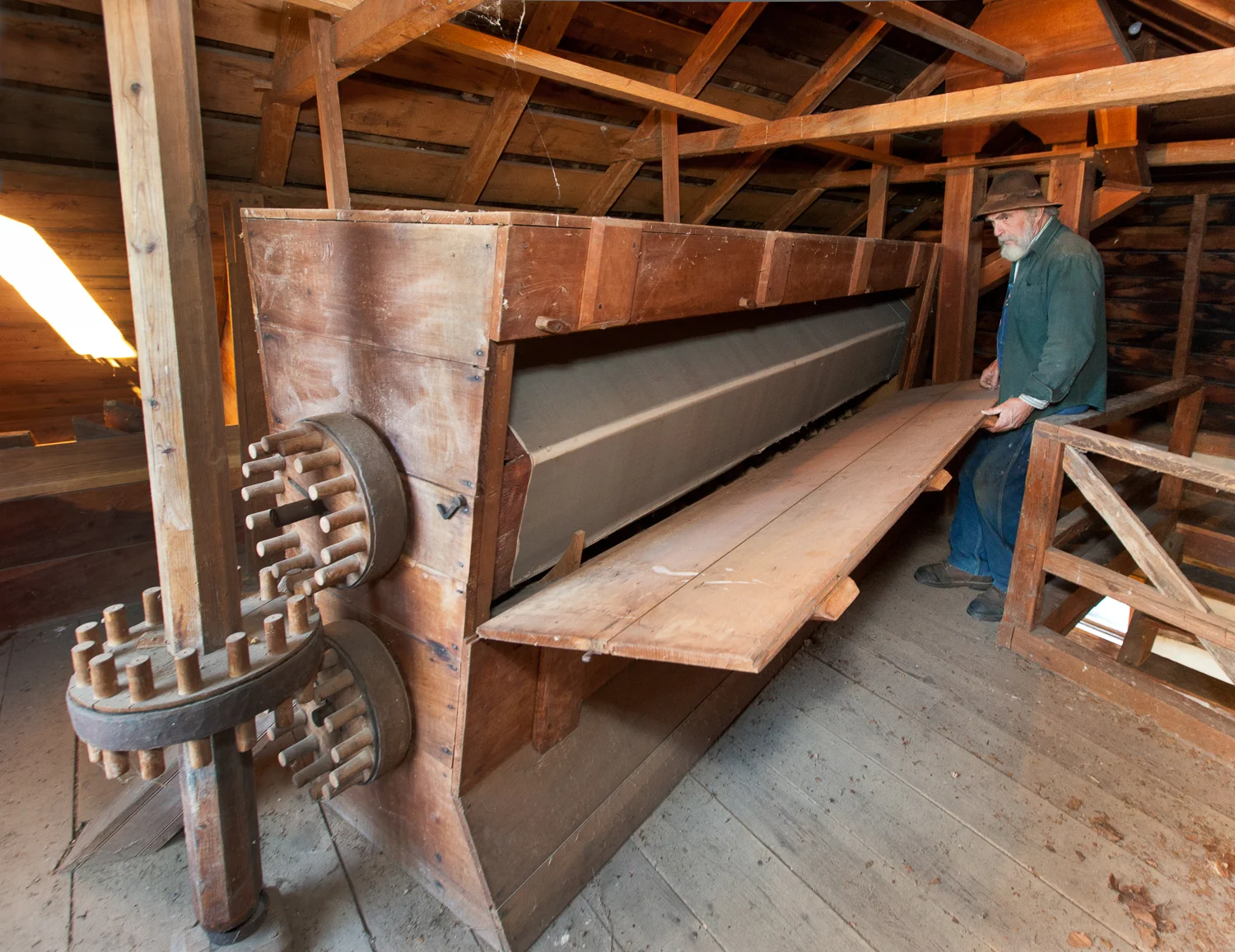
Grindings from the millstones are fed into a rotating "bolt" on the upper floor. Porous cloth forms an elongated cylinder that sifts the grindings. It is powered by a shaft connect by the gears at left to the mill wheel's axel below.
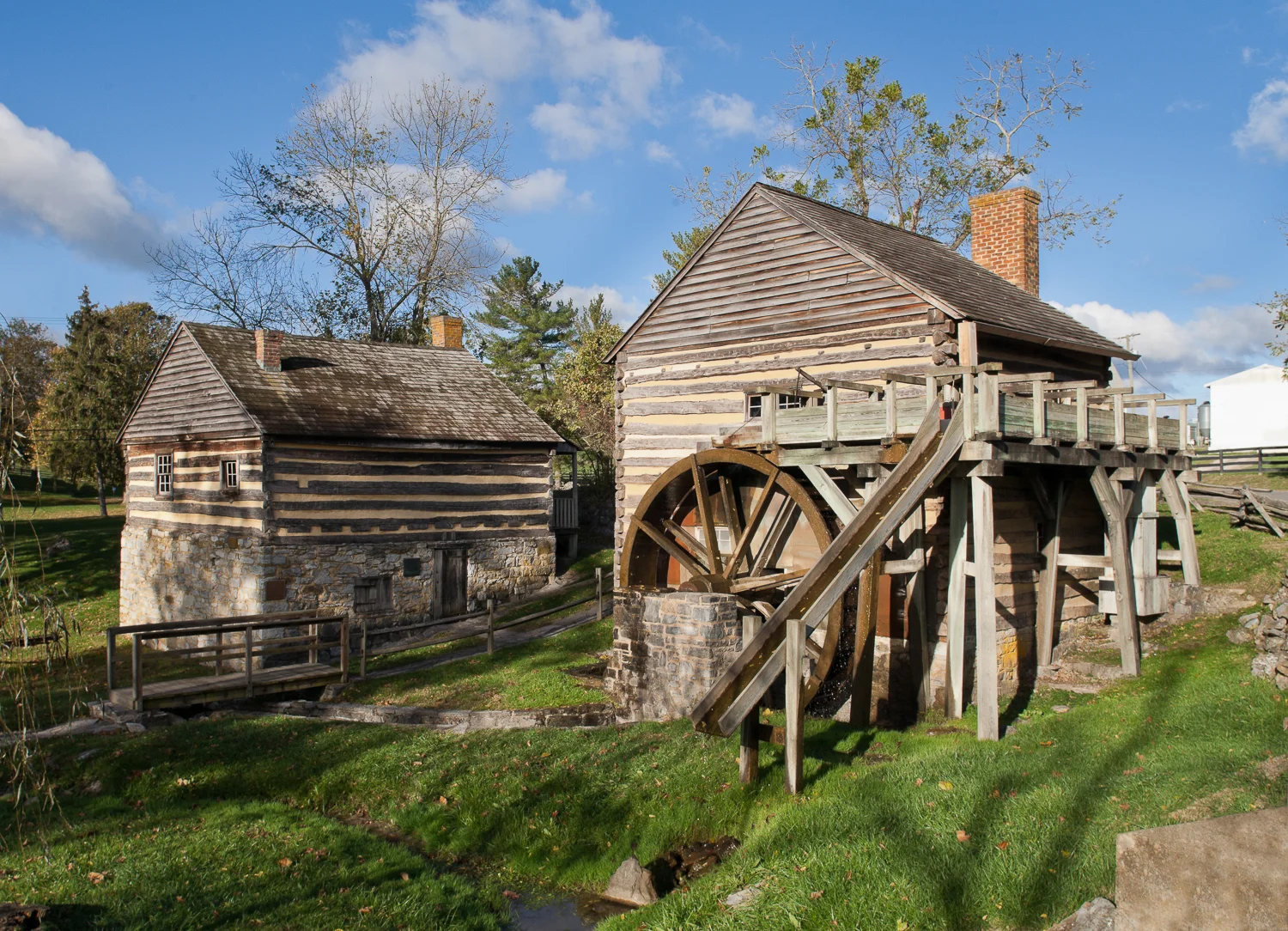
Cyrus McCormick's blacksmith/workshop at left and the mill are today very much the same as when he moved his operation to Chicago to establish International Harvester, the business he built around the reaper he invented and that revolutionized agriculture.
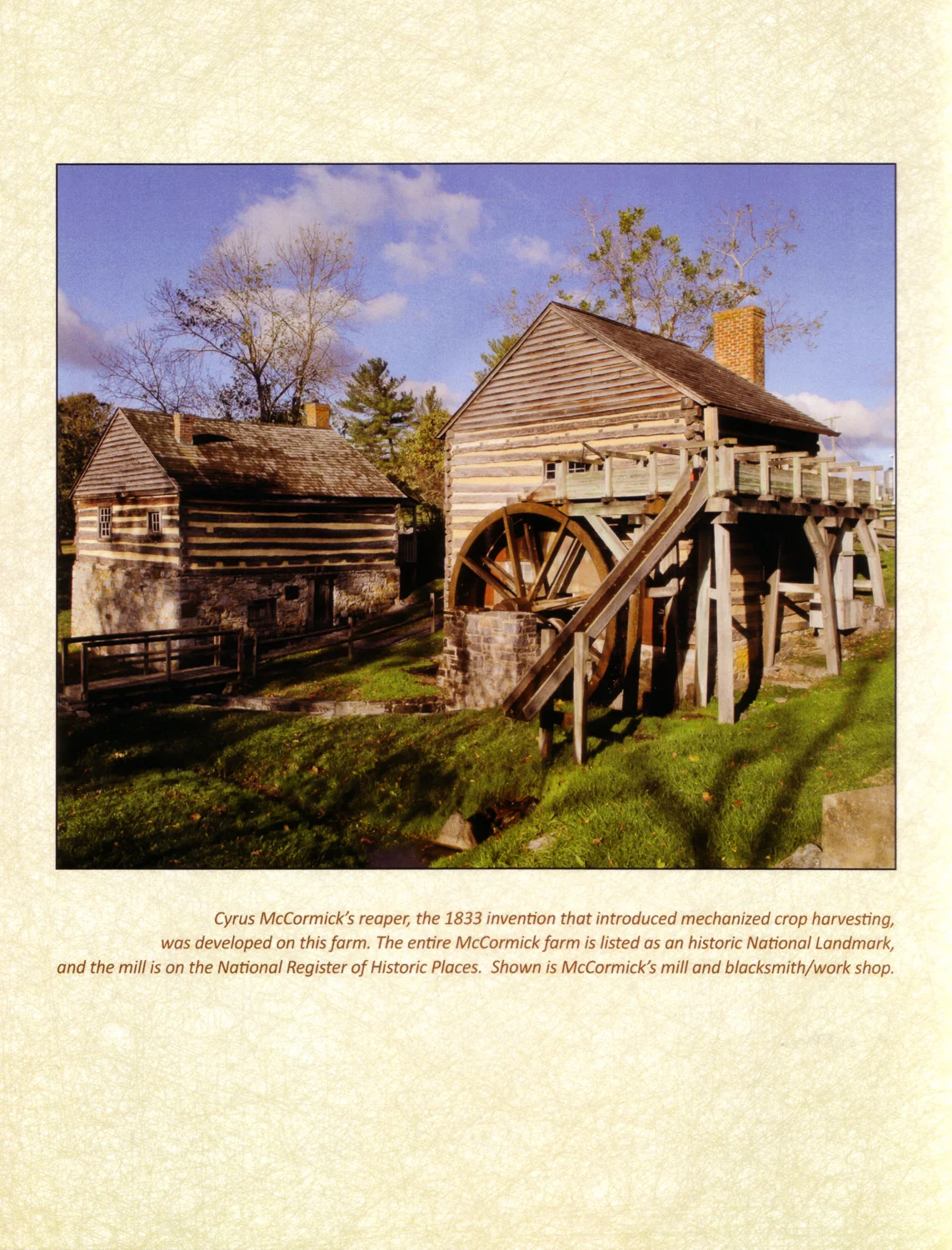
Cyrus McCormick's 1833 invention of the reaper transformed agriculture. He left his farm, blacksmith shop, and watermill in Raphine, Virginia, and moved his family to Chicago, nearer to the vast plains of the midwest, where his reapers made possible grain harvesting on a grand scale.